


September 18, 2026
|
5 min read


Published: September 21, 2026
Blazingly fast way to build, track and deploy your models!
Building an AI agent isn't difficult because calling an LLM is difficult. The harder part is everything around the model: the agent loop, tool execution, sandbox, state, runtime, and permissions required to let an agent actually complete a task.
Claude Managed Agents packages this infrastructure into a managed agent runtime, so developers can configure an agent and let Anthropic handle much of the underlying execution infrastructure.
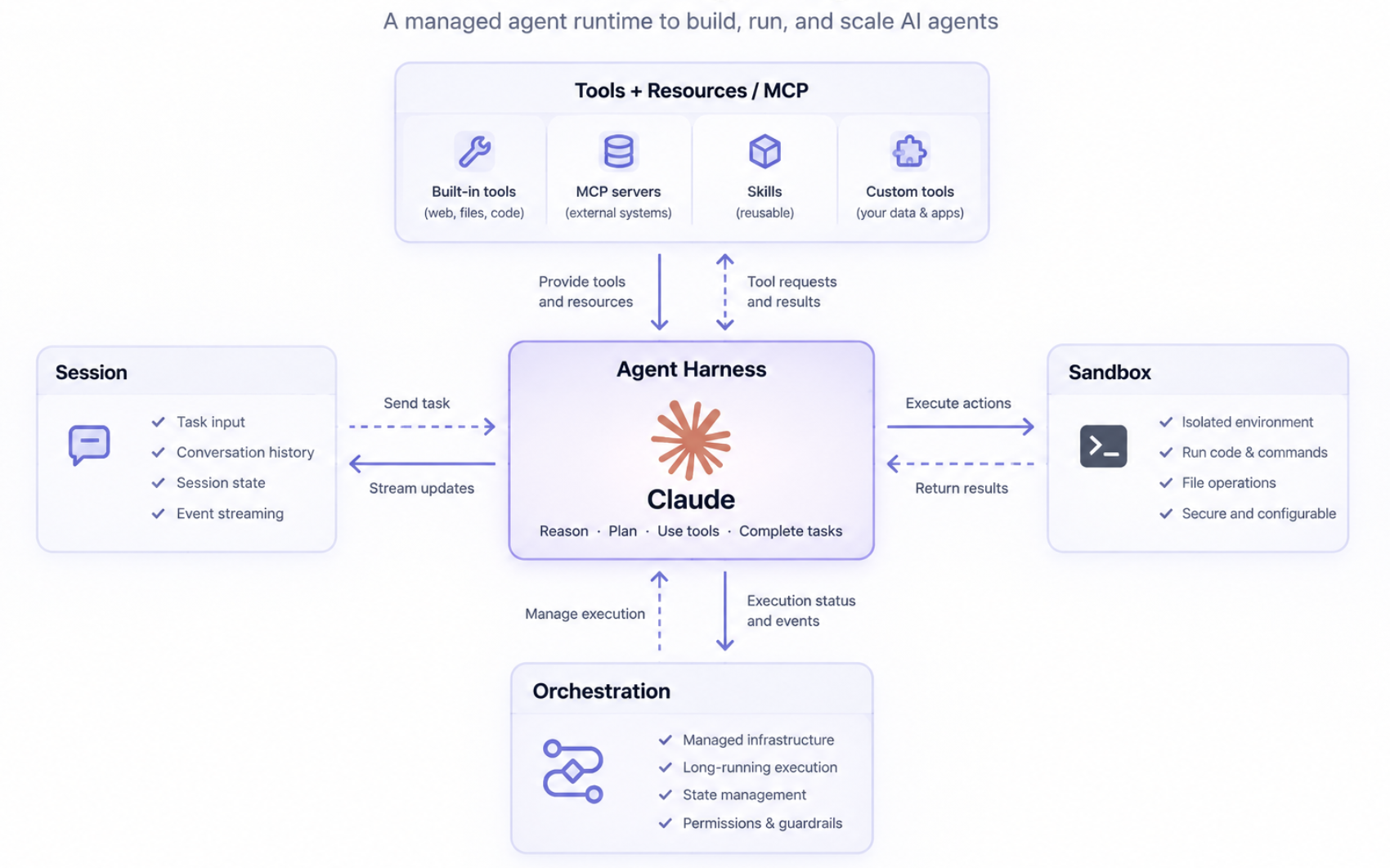
Claude Managed Agents is Anthropic’s pre-built, configurable agent harness that runs in managed infrastructure, designed for long-running and asynchronous agent workloads, giving agents access to tools, execution environments, sessions, and other infrastructure needed to complete multi-step tasks.
The easiest way to understand Managed Agents is to compare it with Anthropic's Messages API.
With the Messages API, you get direct access to Claude. Your application is responsible for building the agent loop around the model: maintaining conversation history, deciding when to call tools, executing those tools, passing results back to Claude, and determining when the task is complete.
With Claude Managed Agents, Anthropic provides the agent harness and the infrastructure around the model. Instead of implementing the complete execution loop yourself, you configure an agent and its environment, then create sessions in which the agent can perform work.
The distinction can be summarized as:
Everything runs behind the managed-agents-2026-04-01 beta header, which the official SDKs set for you. Access is enabled by default on API accounts, and the service is also available through Claude Platform on AWS with some differences in feature availability and session behaviour. Anthropic has named Notion, Rakuten and Sentry among the early teams building on it.
The word doing the most work in "Anthropic Managed Agents" is managed. You are not getting a new model or a new capability - Claude could already use tools. You are getting someone else's operations team.
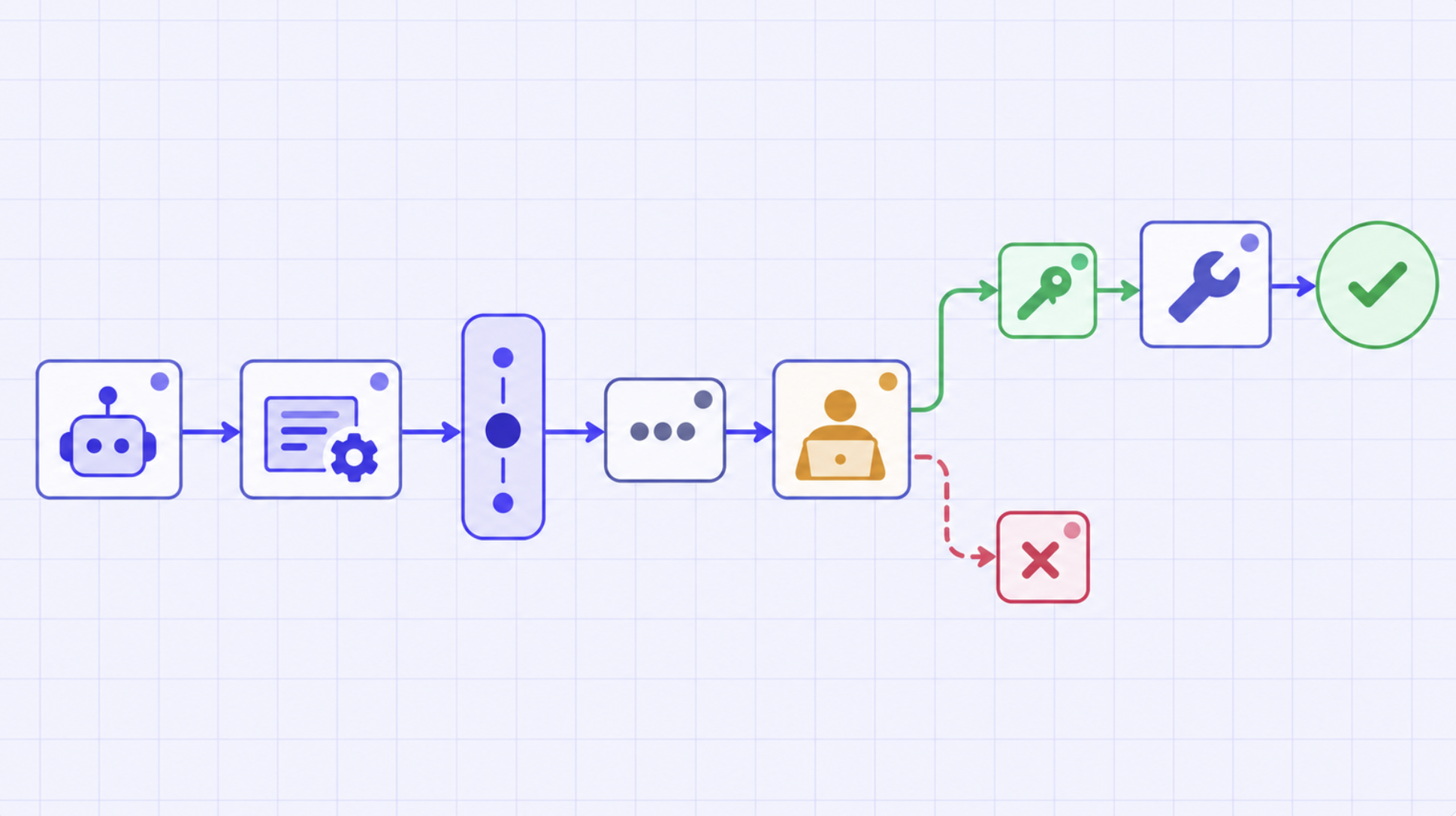
The lifecycle is five steps, and it's worth understanding because each one maps to a resource you create and pay for.
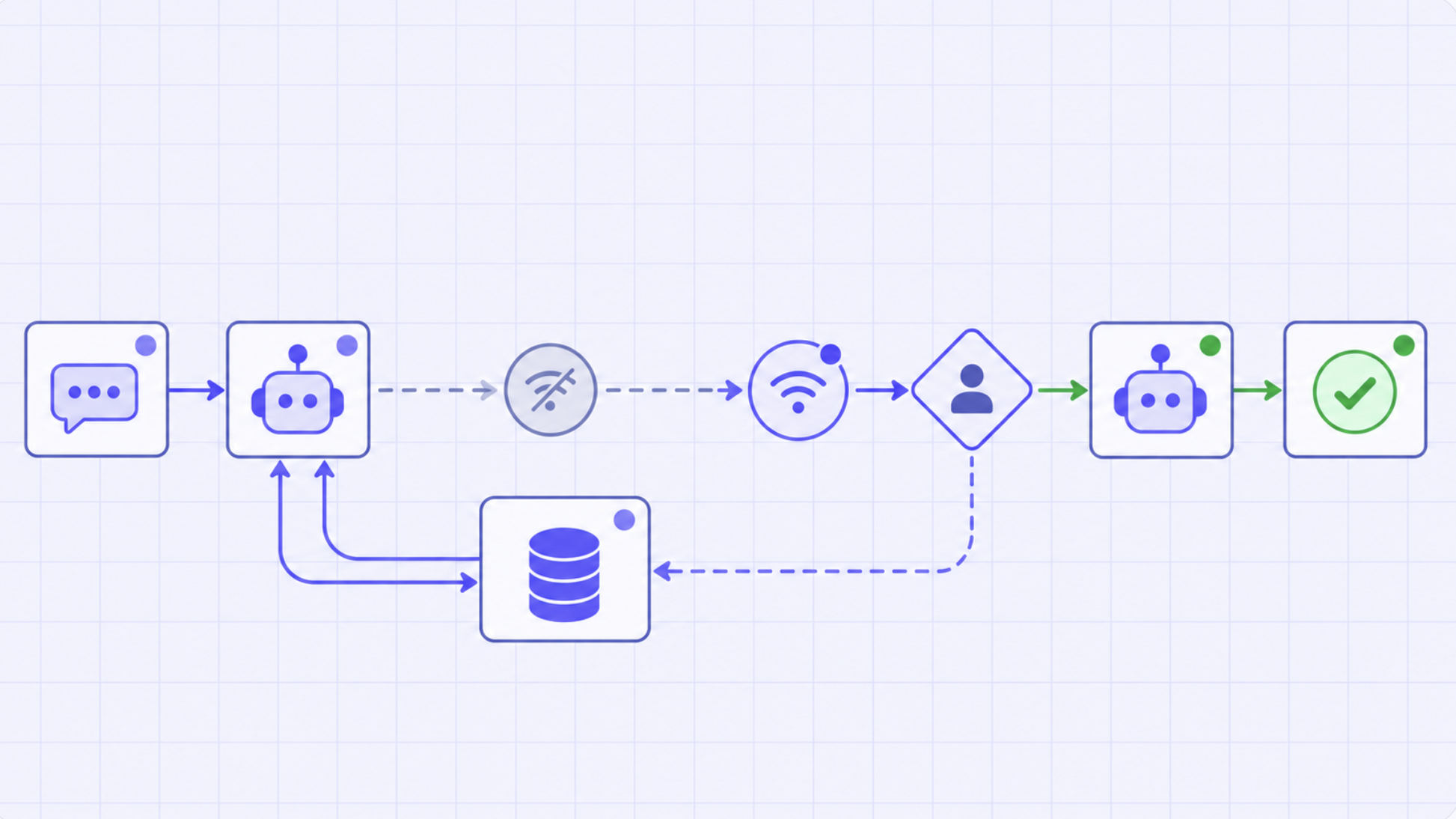
Step five is the one people underestimate. A long-horizon agent that can't be redirected halfway through is a batch job with extra latency.
Claude Managed Agents is built around a few core concepts that separate the agent configuration from the individual task it performs.
An Agent is the reusable configuration that defines how the agent behaves. It can specify the Claude model, system prompt, tools, MCP servers, and skills available to the agent.
For example, an agent could be configured as:
Research Agent
├── Model: Claude
├── System prompt: Research analyst
├── Tools
├── MCP servers
└── Skills
Once the agent is configured, you can create sessions using that definition rather than rebuilding the configuration for every task.
The environment is where the agent actually performs its work.
This is important because an agent needs somewhere to execute commands, manipulate files, run code, and interact with tools. Managed Agents can use Anthropic-managed sandbox environments, while Anthropic also provides support for self-hosted sandbox configurations.
This separates the agent's reasoning from the environment in which its actions are executed.
A session represents a running instance of an agent performing a task.
Instead of treating every model call as an isolated request, a session gives the agent a persistent execution context in which it can work through a task, interact with tools, and maintain state.
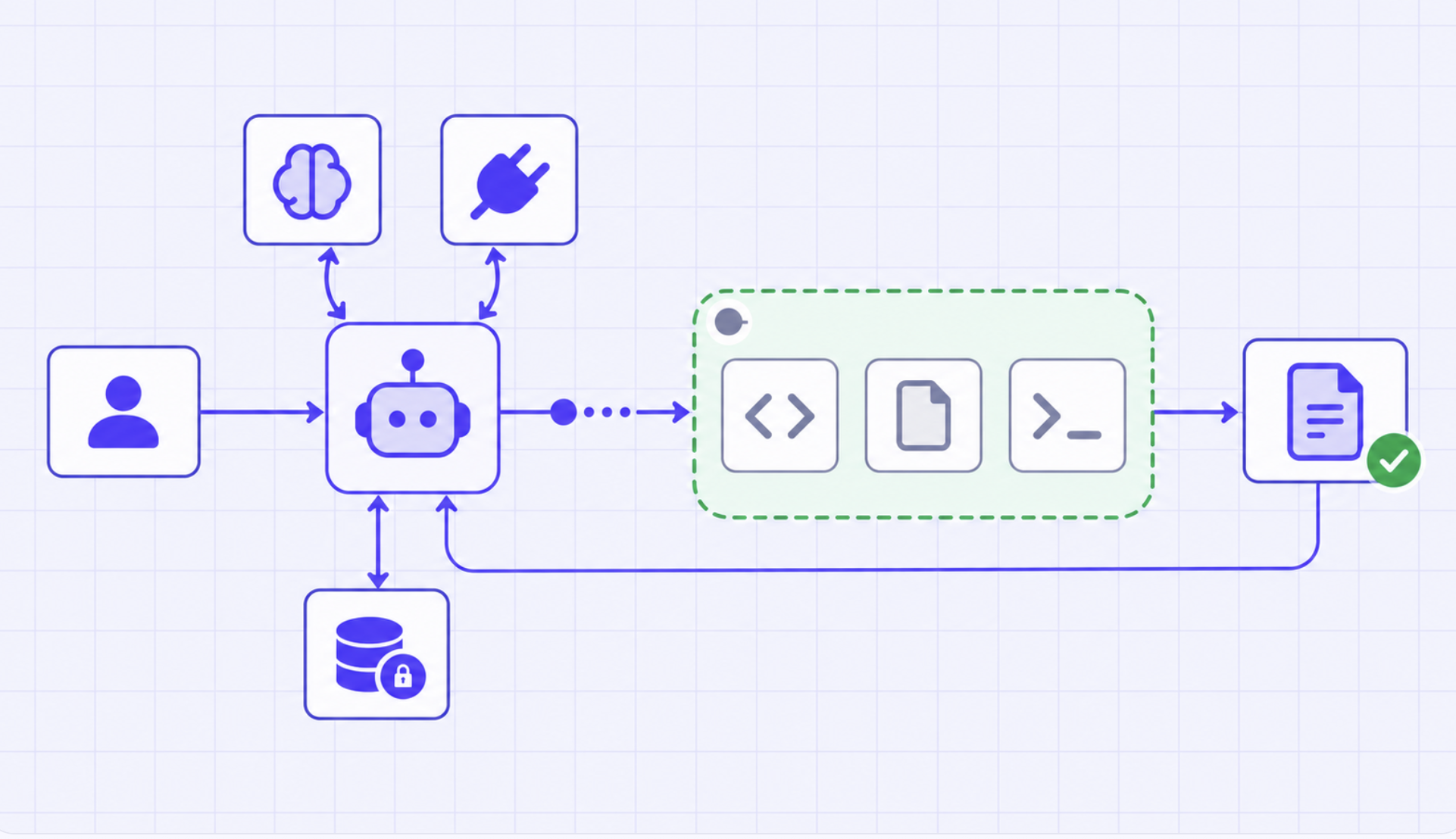
A simplified flow looks like:
Agent configuration
↓
Environment
↓
Session
↓
Agent performs work
↓
Tools / files / code / MCP
This session-based model is particularly relevant for long-running workloads where an agent may need to perform many actions before producing a final result.
Applications interact with Managed Agent sessions through events. These can represent user messages, agent activity, tool results, and other changes in the session.
This allows an application to start an agent session and stream its progress rather than implementing the entire orchestration loop itself.
At a high level:
Your application
│ Start / send event
↓
Managed Agent session
├── Reason
├── Call tool
├── Execute code
├── Read / write files
└── Continue working
↓
Stream events back
↓
Your application
The result is a separation between the application that requests work and the infrastructure that executes the agent.
That separation is the core idea behind Managed Agents: the developer defines the agent and its capabilities, while the managed runtime handles much of the machinery required to keep the agent running.
Once an agent, environment, and session are configured, the Managed Agents runtime handles the execution loop.
In simplified form:
Task
↓
Claude reasons
↓
Tool call
↓
Tool result
↓
Claude reasons again
↓
...
↓
Final result
The key difference from building an agent with the Messages API is that your application doesn't have to orchestrate each model call and tool result itself. Managed Agents handles that loop and exposes the execution through the session and event interfaces.
The value of any agent gateway or managed harness is measured by what you no longer have to write. Managed Agents ships with:
Anthropic reports that in internal testing on structured file generation, Managed Agents improved task success by up to 10 points over a standard prompting loop, with the largest gains on the hardest problems. That is a claim about the harness, not the model and it's a fair illustration of why harness quality matters at all.
Worth keeping separate in your head: several of the headline capabilities are not generally available. Multi-agent coordination, self-evaluation against success criteria, MCP tunnels and dreaming sit in research preview behind a separate access request. If your architecture depends on agents spawning and directing other agents, that's a request form today, not an API.
Most teams evaluating this are really choosing between three points on a spectrum. The Claude Agent SDK comparison goes deeper, but here's the shape of it:
The pattern is consistent: every row you hand to Anthropic buys you time and costs you optionality. For a first agent, that's usually the right trade. For the twentieth, running across three teams with different compliance requirements, it usually isn't.
Managed Agents works best when:
That last one is the honest case for it. Renting a harness to validate whether an agent is worth building is a reasonable engineering decision.
Three constraints come up repeatedly once an agent moves from pilot to real traffic.
The model choice is made for you. The harness is purpose-built for Claude, which is exactly why it performs well and exactly why you can't route the 80% of your tasks that don't need a frontier model to something cheaper. On an agent running thousands of times a day, that's where the bill lives.
Cost has two components, not one. You pay standard Claude token rates plus a session-based charge for the managed runtime. Session-hour pricing is widely quoted in third-party write-ups, but check current rates against Anthropic's own pricing page before you model it. We break the full picture down in our Claude Managed Agents pricing analysis.
Data retention is a real gate for regulated teams. Because Managed Agents is stateful by design - sessions store conversation history, sandbox state and outputs server-side.- Anthropic's documentation states it is not currently eligible for Zero Data Retention or HIPAA Business Associate Agreement coverage. You retain control in the sense that you can delete sessions and uploaded files through the API at any time, but if your compliance posture requires ZDR or a BAA, this is a hard blocker rather than a procurement conversation. The self-hosted sandbox option addresses where code executes, not what the platform retains.

TrueForge is TrueFoundry's open-source, vendor-neutral agent harness for teams that want more control over how their agents run in production. Instead of tying the runtime to a single model provider, TrueForge lets you bring your own models, MCP servers, and infrastructure while handling the agent loop, tool execution, context management, approvals, and sandboxing.
Where a self-hosted agent like Hermes leaves much of the production infrastructure to the developer, TrueForge provides the surrounding control plane needed to operate agents across teams and environments. This includes centralized MCP access and credentials, human-in-the-loop approvals, sandboxed execution, observability, and governance.
You can run it locally with npx @truefoundry/trueforge or deploy it for a team with Docker Compose or Helm.
TrueForge also separates the agent runtime from the model layer. This means teams can switch models or route workloads to different providers without rebuilding the agent itself.Combined with TrueFoundry's AI Gateway, teams can also apply model routing and cost controls to avoid using expensive frontier models for tasks that don't require them. The result is a middle ground between a fully managed runtime and building the entire agent infrastructure yourself: an open-source agent harness with the operational controls needed to run production agents at scale.
In TrueFoundry's benchmark against Claude Managed Agents, TrueForge reached roughly the same task accuracy while using about 40% as many tokens when both were run on Opus 4.8, making it about 30% cheaper per run. When the same benchmark was run with GLM-5.2 on TrueForge, it achieved the same ~11/14 task score at about $2.90 per run versus $11.80 for Claude Managed Agents, roughly 75% lower cost.
TrueFoundry also provides a second lever for reducing model costs through AI Gateway's Auto Routing. Instead of sending every request to a frontier model, Auto Routing classifies requests by complexity and routes them to different model tiers. In TrueFoundry's benchmark across 550 prompts, routing between Haiku, Sonnet, and Opus reduced cost by 69% while retaining 98% of baseline quality, and mean latency dropped from 7.6 seconds to 4.0 seconds. On production-shaped traffic, the overall cost reduction reached 80%.
These two layers address different parts of the cost equation. TrueForge reduces the overhead of running the agent itself, while model routing lets you avoid using an expensive model when the task doesn't require one. For teams running agents at scale, having both controls can matter more than the price of the model alone.
TrueForge is open source and MIT licensed, while TrueFoundry's AI Gateway adds the operational layer teams need when moving from individual agents to production: centralized model access, budgets, guardrails, credential management, and unified traces.
If you're comparing Claude Managed Agents with a more configurable architecture, TrueFoundry is worth considering when model flexibility, infrastructure control, and agent cost optimization matter alongside the agent runtime itself.
Managed Agents governs one agent's runtime very well. What it doesn't do is govern a fleet which is the problem that shows up around agent number five, when finance asks what any of this costs and security asks who approved the credentials.
An agent harness controls how an agent works. An AI Gateway controls how that agent accesses models.
For example, an organization might run agents using Claude Managed Agents or TrueForge while routing model requests through an AI Gateway.
TrueFoundry's AI Gateway sits in front of every model and MCP call an agent makes, applying centralized model access, per-team budgets, rate limits, guardrails, credential management and unified traces - across whichever agents and frameworks your teams are running. It supports 1,000+ LLMs through a single OpenAI-compatible API, adds roughly 3–4 ms of overhead, and handles 350+ RPS on a single vCPU, so it can sit in the hot path of a long-running agent without becoming the bottleneck. It runs in your own VPC, on-prem or air-gapped.
This becomes particularly useful when an organization runs agents across multiple models rather than relying on a single model provider.
Agent runtime: manages the agent loop, tools, state, and execution.
AI Gateway: manages model access, routing, policies, observability, and provider abstraction.
This separation lets teams change or add models without having to redesign the agent itself.
Claude Managed Agents moves agent development up a level: instead of building the execution infrastructure around Claude yourself, you can use a managed harness designed for long-running, asynchronous agent workloads.
The important distinction is between the model and everything around it. The model provides the reasoning, while the agent harness manages the loop, tools, sandbox, sessions, and execution. Managed Agents packages much of that infrastructure into Anthropic's platform, while open-source approaches such as TrueForge give teams more control over the harness and runtime.
For production AI systems, the choice is therefore not only about which model to use. It is also about where the agent runtime lives, who operates it, how much control you need, and how you govern model access.
As agents become more capable and handle increasingly complex workflows, these infrastructure decisions will become an increasingly important part of building reliable production agents.
Q: What are Claude Managed Agents?
A: Claude Managed Agents is Anthropic's suite of composable APIs for building and running cloud-hosted AI agents on the Claude Platform. It provides a pre-built agent harness — the tool-calling loop, sandboxed execution, session state, scoped permissions and tracing — so teams deploy agents without building their own runtime. It launched in public beta on 8 April 2026 and is built around four concepts: agents, environments, sessions and events.
Q: What's the difference between Claude Managed Agents and the Claude Agent SDK?
A: The Claude Agent SDK runs the agent loop inside your own process and infrastructure; Claude Managed Agents runs it on Anthropic's. With the SDK you own the runtime, the sandbox and the operational burden. With Managed Agents you hand all three to Anthropic and get production infrastructure, persistence and console tracing in return. Both are Claude-only.
Q: How much do Claude Managed Agents cost?
A: Cost has two parts - standard Claude API token rates for the model, plus a session-based charge for the managed runtime. Because agents run for long periods and the harness itself consumes tokens for tool calls and context management, the token side usually dominates the bill. Our pricing breakdown works through the full per-run math.
Q: Can I deploy TrueFoundry in my own VPC or on-prem?
A: Yes. TrueFoundry runs in your VPC, on-prem, air-gapped, hybrid or across multiple clouds, and no data leaves your domain. This is the main reason regulated enterprises choose it over SaaS-only gateways - particularly relevant here, since Managed Agents is not currently eligible for Zero Data Retention or HIPAA BAA coverage.
Q: Does TrueFoundry support MCP and AI agents?
A: Yes. TrueFoundry includes an MCP Gateway, Agent Gateway and an MCP & Agents Registry with tool-level access control. Agents built on LangGraph, CrewAI, AutoGen, the Claude Agent SDK or custom frameworks can all be deployed and governed centrally.
Q: How many LLMs does TrueFoundry support?
A: 1,000+ LLMs through a single OpenAI-compatible API. You switch models by changing the model name in the request — same URL, same credentials — which is what makes routing cheap tasks to cheap models a config change rather than a rewrite.
TrueFoundry AI Gateway delivers ~3–4 ms latency, handles 350+ RPS on 1 vCPU, scales horizontally with ease, and is production-ready, while LiteLLM suffers from high latency, struggles beyond moderate RPS, lacks built-in scaling, and is best for light or prototype workloads.






The latest news, articles, and resources sent to your inbox
.png)
.png)
.png)
.png)
.png)
.png)
.png)
.png)
.png)
.png)


