


September 19, 2026
|
5 min read


Published: March 2, 2026

Blazingly fast way to build, track and deploy your models!
Large Language Models (LLMs) are transforming how enterprises automate tasks, generate content, and interact with data. However, most LLM services today are cloud-centric, raising concerns about data security, compliance, and control.
For organizations dealing with sensitive or regulated information, relying on external APIs or public cloud models is often not viable. This has led to a growing shift toward on-premise LLM deployments, where businesses run models securely within their own infrastructure.
In this article, we explore what on-premise LLMs are, why they matter, how they work, and how platforms like TrueFoundry enable scalable, secure deployments in enterprise environments.

On-premise LLMs refer to large language models that are deployed and operated within an organization’s own infrastructure rather than through external cloud services or third-party APIs. These models can be open-source or proprietary and are typically run on in-house GPU servers, private data centers, or isolated cloud environments configured to meet internal security and compliance standards.
Unlike cloud-hosted LLMs that rely on public endpoints and vendor-managed infrastructure, on-premise LLMs are fully controlled by the organization. This allows for greater customization, fine-tuning, and integration with internal systems and workflows. Enterprises can choose which models to use, such as LLaMA 2, Mistral, or Mixtral, and optimize them based on specific business or domain needs.
On-premise deployment enables teams to tailor model behavior, enforce data residency policies, and ensure that sensitive information never leaves their trusted network. It also opens up opportunities for tighter performance tuning and cost control, especially for high-volume or latency-sensitive applications. For organizations prioritizing autonomy, security, and regulatory compliance, on-premise LLMs offer a practical and scalable alternative to commercial AI APIs.
On-premise LLM deployment gives you full control over infrastructure, data, and model behavior. However, it also requires careful planning, investment, and ongoing management. Below are the key aspects you should consider:
You need high-performance hardware to run large language models efficiently. This includes powerful GPUs such as NVIDIA A100 or H100, ample RAM, high-speed networking, and fast SSD storage to handle large model weights and datasets.
You retain complete ownership of your data, enabling air-gapped setups, strict firewall policies, and compliance with data residency regulations like GDPR and HIPAA. This makes on-premise deployment ideal for industries handling sensitive or regulated information.
You must implement ML pipelines for versioning, containerization, deployment, and monitoring. Continuous performance tracking helps ensure model accuracy, reliability, and operational stability over time.
Although you avoid recurring token-based API fees, on-premise LLM deployment requires significant upfront capital investment in hardware. You also need to account for ongoing operational costs such as power, cooling, maintenance, and skilled personnel.
You gain full access to model weights, allowing advanced fine-tuning with proprietary data. This enables highly tailored performance aligned with your organization’s workflows, unlike generic cloud-hosted models.
Your scalability depends on available hardware capacity. Unlike cloud auto-scaling, you must plan for peak workloads, implement load balancing, and optimize systems to maintain low latency and high throughput.
Your internal IT or DevOps team is responsible for security patching, infrastructure upkeep, and model updates. Regular maintenance ensures system reliability, security, and compatibility with evolving AI requirements.
Cloud-based AI services have made it easy for teams to experiment, prototype, and deploy machine learning models at scale. However, when it comes to production workloads in enterprise environments, relying solely on cloud-centric LLMs presents several limitations that can’t be ignored.
Data privacy and control are the most significant concerns. When using public cloud APIs, sensitive input data must be transmitted over the internet and processed on external infrastructure. This introduces risks around data leakage, unauthorized access, and compliance violations—especially in sectors like healthcare, finance, defense, and legal services, where strict regulatory standards apply.
Vendor lock-in is another major drawback. Cloud AI platforms often bundle inference APIs, storage, and fine-tuning into proprietary ecosystems. Once a workflow is built around a specific provider, migrating to another service or bringing workloads in-house becomes time-consuming and costly. This dependency limits long-term flexibility and control over model updates or usage terms.
Unpredictable cost scaling also becomes a challenge as usage grows. LLMs are compute-intensive, and cloud pricing models based on token counts or request volume can lead to spiraling operational costs—especially for applications with high throughput or constant interaction.
Additionally, cloud environments offer limited options for low-latency and edge deployments. Applications that require near-instant responses or offline functionality may struggle to meet performance targets when dependent on external APIs.
Lastly, cloud providers abstract away much of the infrastructure, leaving teams with minimal visibility into performance bottlenecks, optimization opportunities, or tuning parameters.
For enterprises that demand control, transparency, and long-term sustainability, these limitations make a strong case for adopting on-premise LLM solutions.
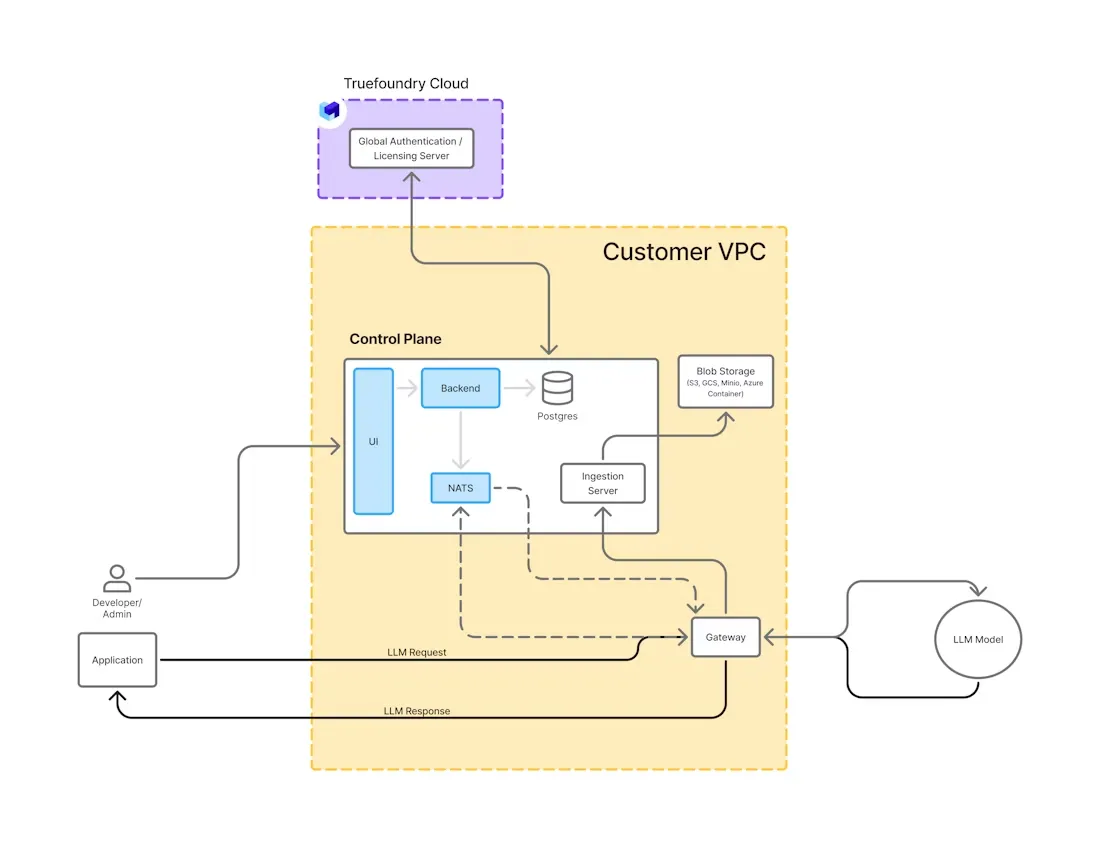
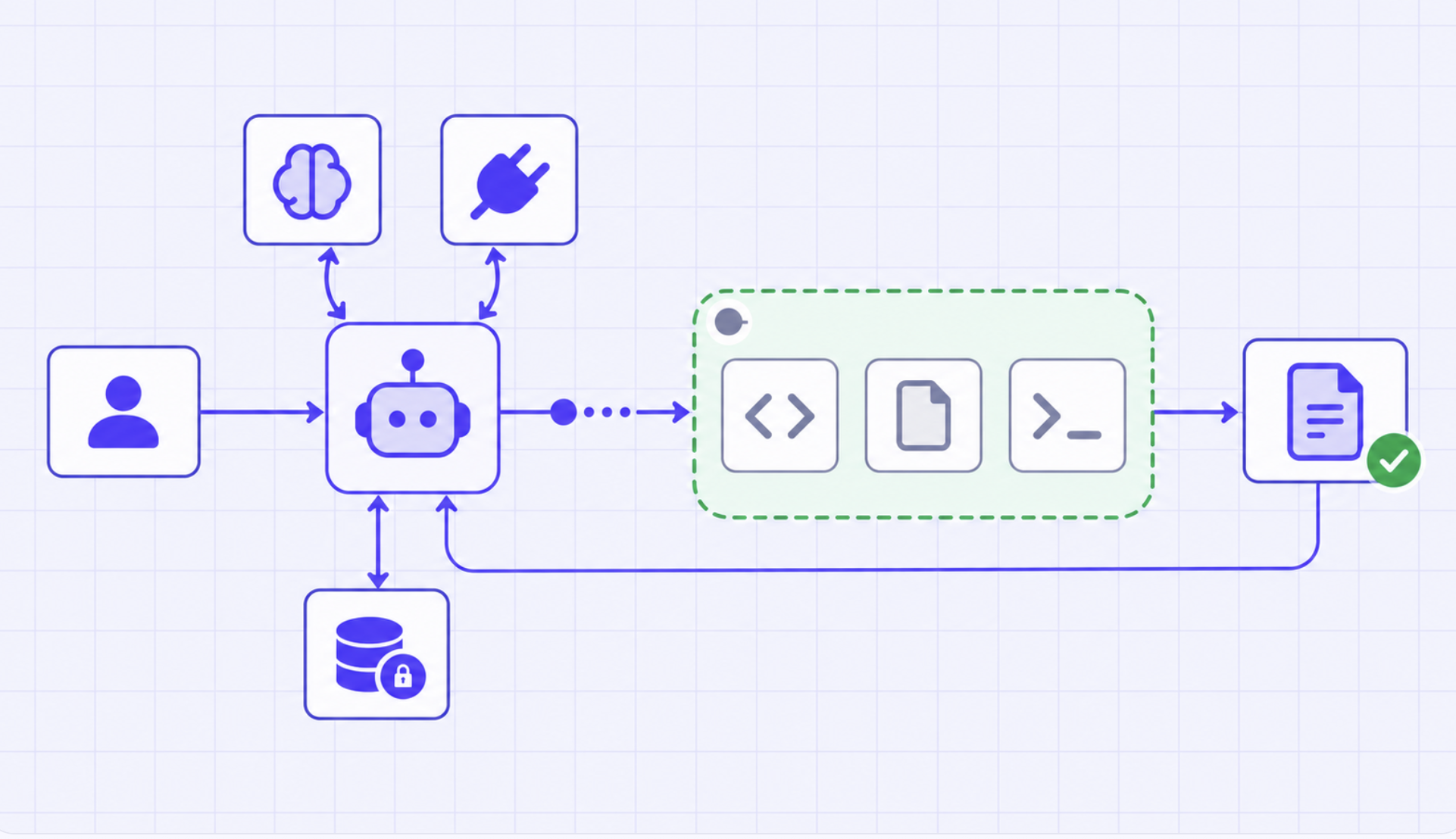
Deploying LLMs on-premise requires a carefully structured architecture that balances performance, security, and maintainability. Below are the key components typically found in a production-grade setup.
Compute Infrastructure: High-performance GPUs are the foundation of on-premise LLMs. Enterprises often use NVIDIA A100, H100, or L40 GPUs, depending on the model size and throughput requirements. These are hosted in local data centers or private cloud clusters with appropriate cooling, networking, and storage.
Inference Engine: Inference frameworks such as vLLM, TGI, or DeepSpeed-Inference handle the actual model execution. They optimize memory use, support token streaming, and allow for batching multiple requests to maximize throughput.
Model Management and Storage: Models are stored locally in secure artifact repositories or volume mounts. Versioning, rollback, and access control mechanisms are essential to manage model lifecycles and audit changes.
Containerization and Orchestration: Tools like Docker and Kubernetes are used to deploy, scale, and manage LLM workloads. Kubernetes handles autoscaling, GPU scheduling, load balancing, and failure recovery, ensuring consistent performance across services.
API Layer and Routing: A REST or OpenAI-compatible API layer exposes LLM functionality to internal applications. It can include multi-model routing, user authentication, and prompt filtering for safety and control.
Observability and Monitoring: Metrics such as latency, GPU utilization, request throughput, and token generation speed are tracked using tools like Prometheus, Grafana, and OpenTelemetry. Logging and alerting are critical for maintaining uptime and debugging issues.
This modular architecture allows enterprises to build scalable and secure LLM systems tailored to their internal policies, performance targets, and compliance requirements.
On-premise LLMs are gaining adoption across industries that require data sovereignty, low-latency performance, and full control over AI pipelines. Here are some common and impactful use cases.
Hospitals and research labs use LLMs to summarize patient notes, generate discharge reports, and assist with clinical documentation. On-premise deployments ensure patient health information stays within the hospital’s secure infrastructure, supporting HIPAA compliance and institutional data policies.
Financial institutions use LLMs for tasks such as summarizing earnings calls, automating compliance reports, and analyzing financial statements. On-premise setups prevent sensitive financial data from being exposed to third-party APIs while maintaining compliance with internal risk frameworks and regulatory audits.
Agencies use LLMs for question answering, summarization of classified reports, and internal knowledge retrieval. Since national security data must remain strictly contained, on-premise LLMs enable generative AI applications without violating data classification protocols.
Law firms and legal departments use LLMs to analyze contracts, generate summaries, and assist with legal research. On-premise deployment ensures attorney–client privileged information never leaves internal servers, maintaining confidentiality and meeting bar association requirements.
Enterprises in manufacturing use LLMs to generate troubleshooting guides, interpret sensor logs, and assist field technicians. Deploying LLMs on local servers helps avoid sending proprietary machine data to external services and reduces latency for remote or disconnected environments.
Telecom companies use LLMs to power chatbots, triage tickets, and provide automated service recommendations. On-premise deployment enables real-time performance while keeping customer data within the internal infrastructure for compliance with regional privacy laws.
These use cases highlight how on-premise LLMs unlock powerful automation and intelligence without compromising on security, compliance, or control.
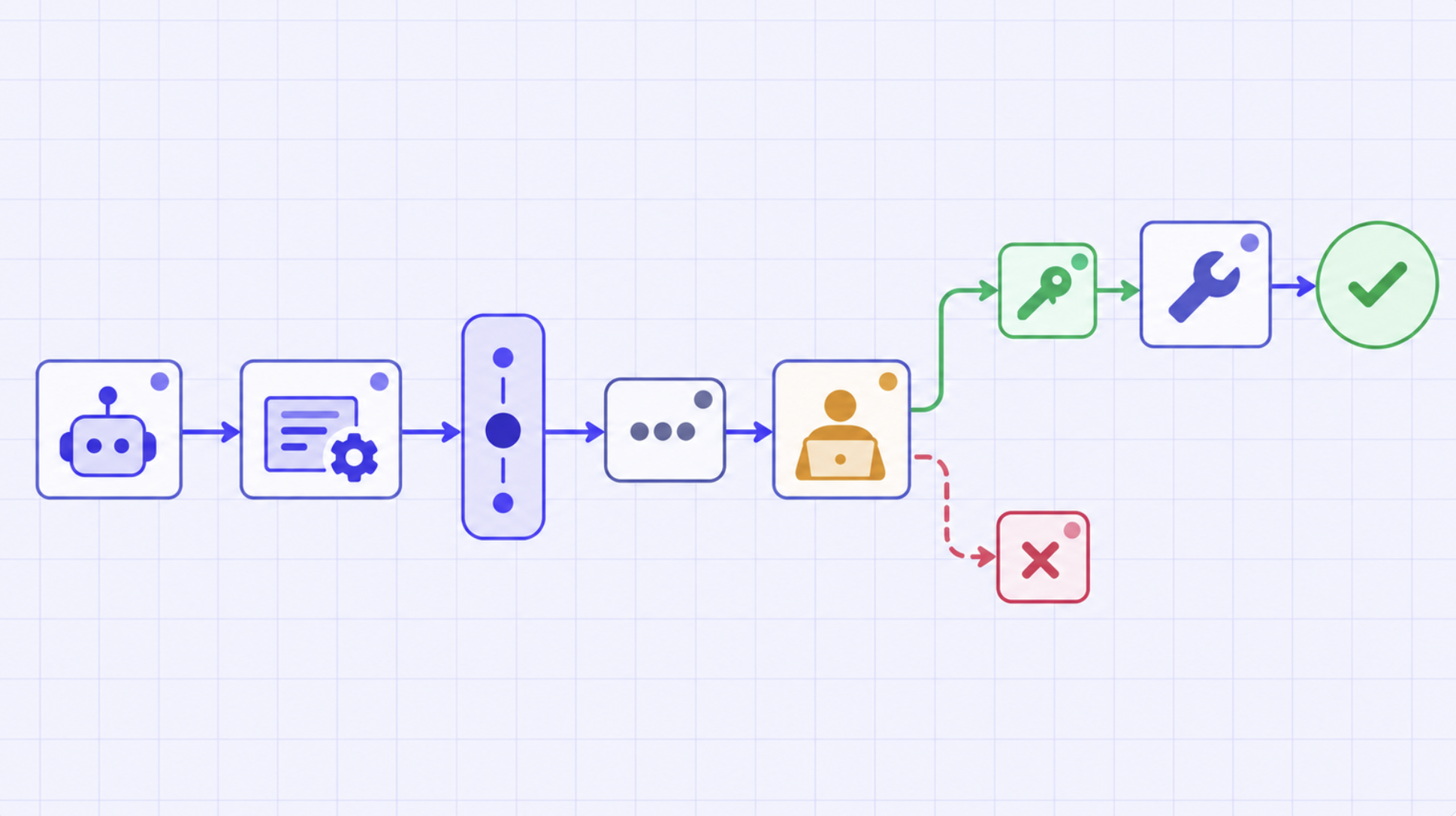
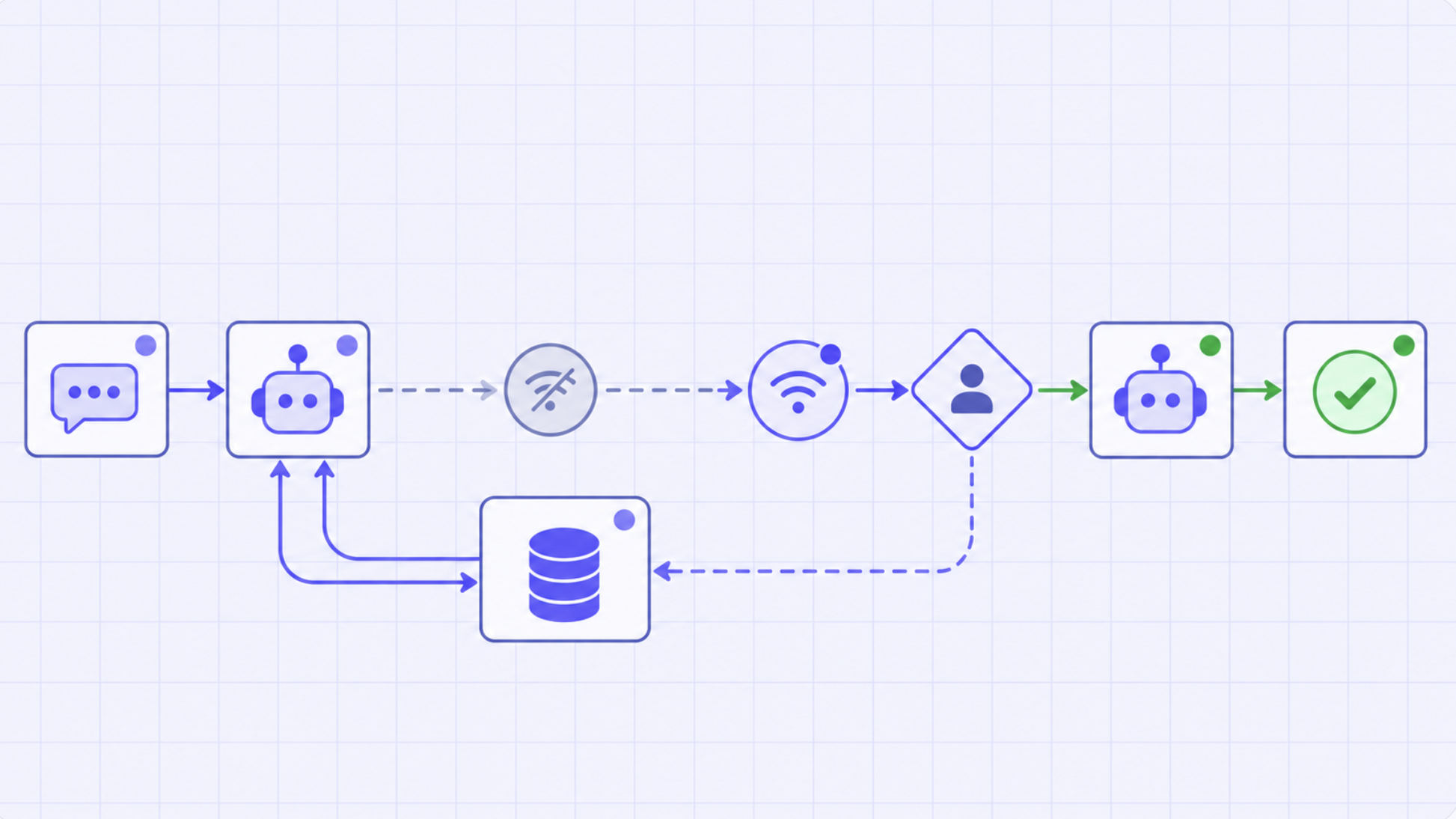
Deploying LLMs on-premise involves a series of coordinated steps, from model selection to production monitoring. A well-defined workflow ensures the system is scalable, secure, and optimized for your organization’s needs.
The process begins by choosing an appropriate model based on your use case. Popular open-source models like LLaMA 2, Mistral, or Mixtral are often preferred for on-premise deployments. Once selected, the model is downloaded, quantized if needed, and validated for compatibility with your infrastructure.
Next, GPU servers or private cloud resources are prepared. This includes setting up container runtimes (e.g., Docker), orchestrators (e.g., Kubernetes), and storage layers to host model weights and logs. Access controls and security policies are configured to meet compliance requirements.
The model is loaded into an inference engine such as vLLM or TGI. These engines provide the runtime environment for real-time text generation, batching, streaming, and memory optimization. Configuration files define batch size, max tokens, and concurrency limits.
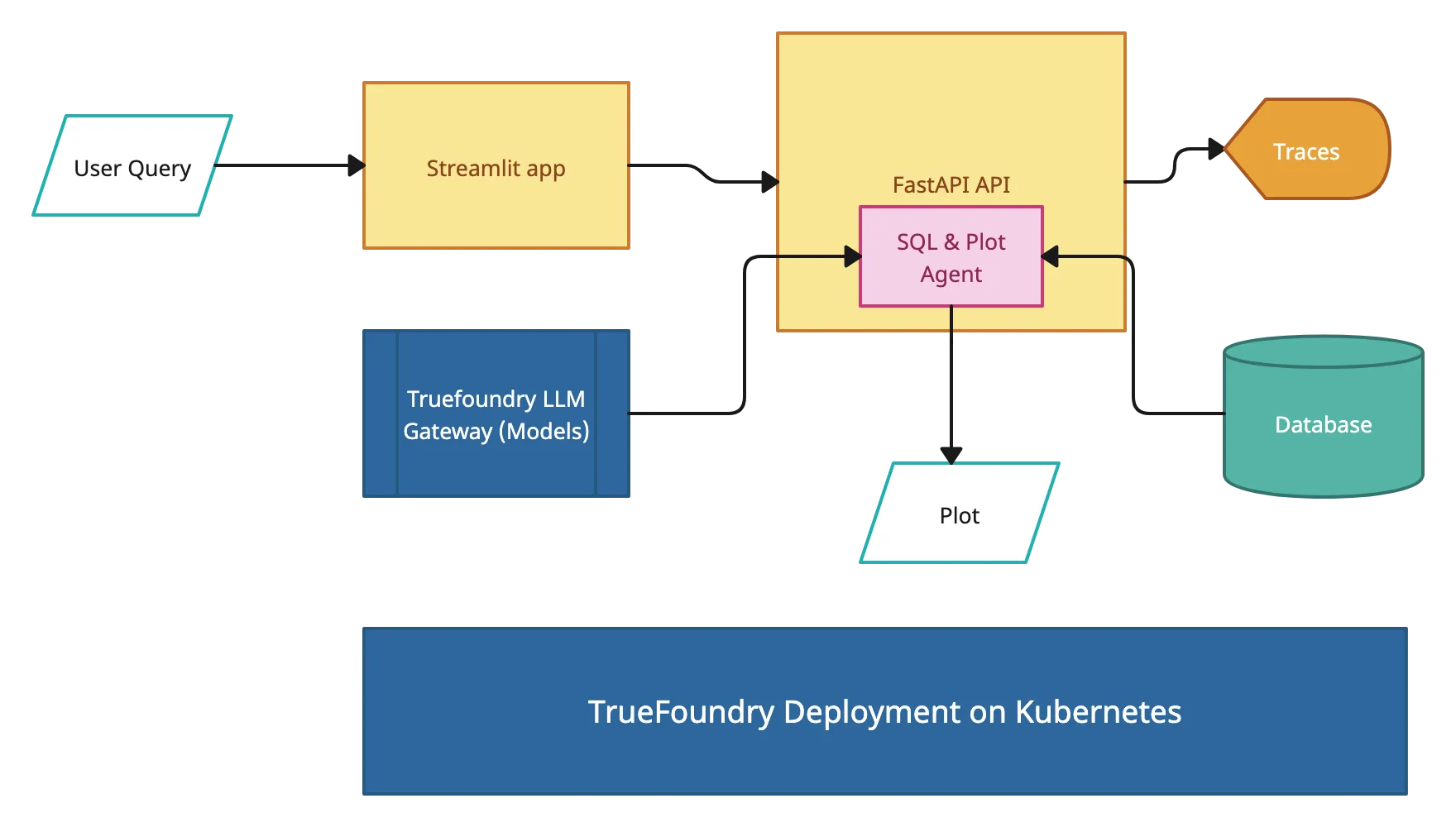
Once the engine is operational, it is exposed through a REST or OpenAI-compatible API. This allows internal apps, tools, or user interfaces to query the model. Multi-model routing, authentication, and rate limiting may be added at this layer for better control.
Observability tools are connected to track GPU usage, latency, token throughput, and request errors. Based on traffic patterns, autoscaling policies or manual scaling procedures are configured to handle demand without downtime.
Following this workflow helps organizations launch and manage LLMs efficiently within their infrastructure without relying on external platforms or exposing sensitive data.
These tools and techniques help you deploy on-prem LLMs with strong performance, security, and full data control while maintaining enterprise-grade reliability.
Deploying LLMs on-premise gives organizations full control over their AI infrastructure but also comes with trade-offs. Understanding both the benefits and challenges is essential for successful adoption.
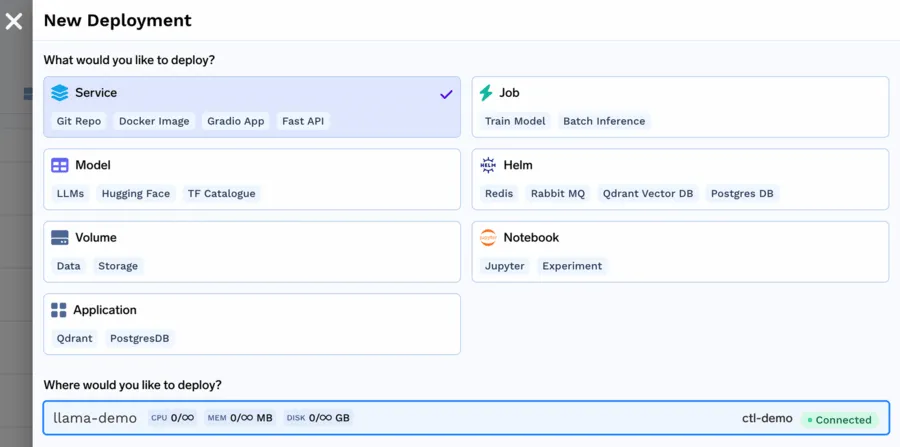
TrueFoundry simplifies the deployment and management of large language models within private infrastructure, making on-premise GenAI accessible to enterprises without requiring deep DevOps or MLOps expertise. Built on top of Kubernetes, TrueFoundry enables fast, secure, and scalable LLM serving through pre-integrated support for high-performance inference engines like vLLM and TGI.
The platform abstracts the complexity of managing containers, GPUs, and scaling policies, allowing teams to focus on building applications rather than maintaining infrastructure. With TrueFoundry’s AI Gateway, organizations can expose LLMs using OpenAI-compatible APIs while applying rate limiting, token-based billing, and multi-model routing, all within their secure environment.
TrueFoundry also offers built-in observability, including real-time monitoring of token usage, latency, and model performance. This helps teams optimize throughput, troubleshoot issues, and enforce governance.
Whether deploying LLaMA 2, Mistral, or fine-tuned internal models, TrueFoundry gives enterprises a production-ready solution for on-premise GenAI, fully customizable, compliant, and built to scale.
As enterprises increasingly adopt large language models, on-premise deployment offers a secure and flexible path to harness GenAI without compromising data privacy, compliance, or infrastructure control. While cloud-based solutions provide convenience, they often fall short in regulated or sensitive environments. On-premise LLMs give organizations full ownership of the stack, greater customization, and predictable costs, making them ideal for long-term AI strategies. With platforms like TrueFoundry, deploying and scaling LLMs internally becomes faster, more efficient, and easier to manage. For organizations focused on control, transparency, and innovation, on-premise GenAI is not just an alternative, it is a strategic advantage.
You deploy LLMs on-prem by containerizing models with Docker, orchestrating them via Kubernetes, and serving them through optimized inference engines like vLLM or TGI. You configure GPUs, networking, and storage, integrate monitoring tools, and implement MLOps pipelines to manage versioning, scaling, security, and performance within your private infrastructure.
Cloud deployment offers on-demand scalability, managed infrastructure, and pay-as-you-go pricing, while on-prem deployment provides full data control, customization, and compliance. You trade cloud flexibility for greater security and sovereignty on-prem, but must handle hardware costs, maintenance, scaling limits, and operational complexity internally.
You can use public cloud LLM services, private cloud environments, hybrid deployments, or managed AI platforms. API-based models like OpenAI or hosted Hugging Face endpoints reduce infrastructure overhead. Hybrid setups let you keep sensitive data on-prem while leveraging cloud scalability for peak workloads and experimentation.
On-prem LLMs require high upfront hardware costs, ongoing maintenance, skilled staff, and capacity planning. You face scaling limitations, power and cooling expenses, and slower upgrades. Managing security patches, model updates, and infrastructure reliability adds operational complexity compared to fully managed cloud-based AI services.
TrueFoundry simplifies on-prem LLM deployment by integrating Kubernetes orchestration, GPU scheduling, model serving, monitoring, and security controls. You gain centralized management, RBAC, observability, and seamless scaling across environments. Its pre-integrated inference engines and compliance-ready features help you deploy production-grade AI securely and efficiently.
TrueFoundry AI Gateway delivers ~3–4 ms latency, handles 350+ RPS on 1 vCPU, scales horizontally with ease, and is production-ready, while LiteLLM suffers from high latency, struggles beyond moderate RPS, lacks built-in scaling, and is best for light or prototype workloads.






The latest news, articles, and resources sent to your inbox
.png)
.png)
.png)
.png)
.png)
.png)
.png)
.png)
.png)
.png)
.png)


