


September 19, 2026
|
5 min read

Published: June 12, 2026

Blazingly fast way to build, track and deploy your models!
Working with Large Language Models (LLMs) is exciting, but it also comes with real-world headaches. Every provider, including OpenAI, Anthropic, Cohere, Mistral, and others, has its own API format, rate limits, and quirks. If you're building an application that depends on multiple models, integration quickly becomes a maintenance nightmare.
This is where an LLM Proxy steps in. Acting as a middleware layer between your app and various LLM providers, an LLM Proxy unifies APIs, improves flexibility, adds monitoring, and ensures compliance, all while helping reduce costs.
In this article, we'll explore the problems developers face when integrating LLMs and show how an LLM Proxy provides practical solutions.
As large language models (LLMs) become central to modern AI applications, developers and enterprises face a new layer of complexity: managing multiple providers, APIs, and configurations across environments. This is where an LLM Proxy steps in.
An LLM Proxy acts as an intelligent intermediary between your applications and various LLM providers such as OpenAI, Anthropic, Google, or Cohere. Much like a traditional network proxy that routes traffic between clients and servers, an LLM Proxy routes requests from your applications to one or more language models, applying policies, rules, and optimizations along the way - the foundation of what's known as LLM routing.
It abstracts away vendor-specific differences and gives developers a unified interface to manage, monitor, and optimize LLM usage. Instead of hardcoding API keys or maintaining multiple SDKs, you send all requests through a single endpoint, and the proxy handles the rest.
Simplified Multi-Model Management
Many organizations use multiple LLMs to balance accuracy, latency, and cost. For example, GPT-4 might be ideal for reasoning-heavy tasks, while Gemini or Claude could be faster or cheaper for summarization. An LLM Proxy lets you manage this multi-model strategy centrally, without rewriting code for every provider. Modern implementations make this cost-, latency-, and quality-aware at the gateway level.
Centralized Governance and Access Control
In large teams, API keys and access permissions can become chaotic. An LLM Proxy centralizes governance by managing who can access which models and applying role-based access control (RBAC). It ensures that developers, teams, or services only access approved resources — see how virtual keys, RBAC, and compliance-grade logs work in practice.
Cost Optimization and Budgeting
Since each provider has different pricing models, costs can spiral quickly. An LLM Proxy provides cost visibility, allowing you to track usage per user, team, or endpoint. You can set budgets, monitor token consumption, and make data-driven decisions on routing to cheaper models when possible. This discipline is the core of FinOps for AI.
Improved Observability
A proxy layer introduces analytics and logging, giving you insights into performance, latency, prompt usage, and error rates. Observability and tracing are crucial for debugging production AI systems and ensuring consistent service quality.
Security and Compliance
Enterprises must comply with strict data governance rules. An LLM Proxy allows you to sanitize inputs, filter PII, and log requests for compliance audits — including defending against prompt injection at the gateway layer. It can also enforce region-specific routing to comply with data residency laws.
Let's break down the lifecycle of a request through an LLM Proxy:
Request Handling: The application sends a query (prompt or API call) to the LLM Proxy endpoint instead of directly hitting a model API.
Validation and Normalization: The proxy validates the request for completeness, compliance, and format, ensuring it adheres to internal policies.
Dynamic Model Selection: Based on routing rules, it decides which LLM to send the request to. For example, simple prompts might go to GPT-3.5, while complex reasoning tasks might route to Claude.
Request Forwarding and Execution: The proxy securely forwards the validated request to the chosen model provider via its API.
Response Aggregation and Formatting : Once a response is received, the proxy normalizes it into a standard structure (JSON, text, etc.), regardless of which provider handled it.
Logging and Analytics: Every transaction is logged for observability, including latency, tokens, cost, and provider used.
A robust LLM Proxy provides much more than just request routing. Below are its essential capabilities:
Multi-Model Support: Connect to multiple providers like OpenAI, Anthropic, Gemini, and open-source models (via APIs or local inference servers).
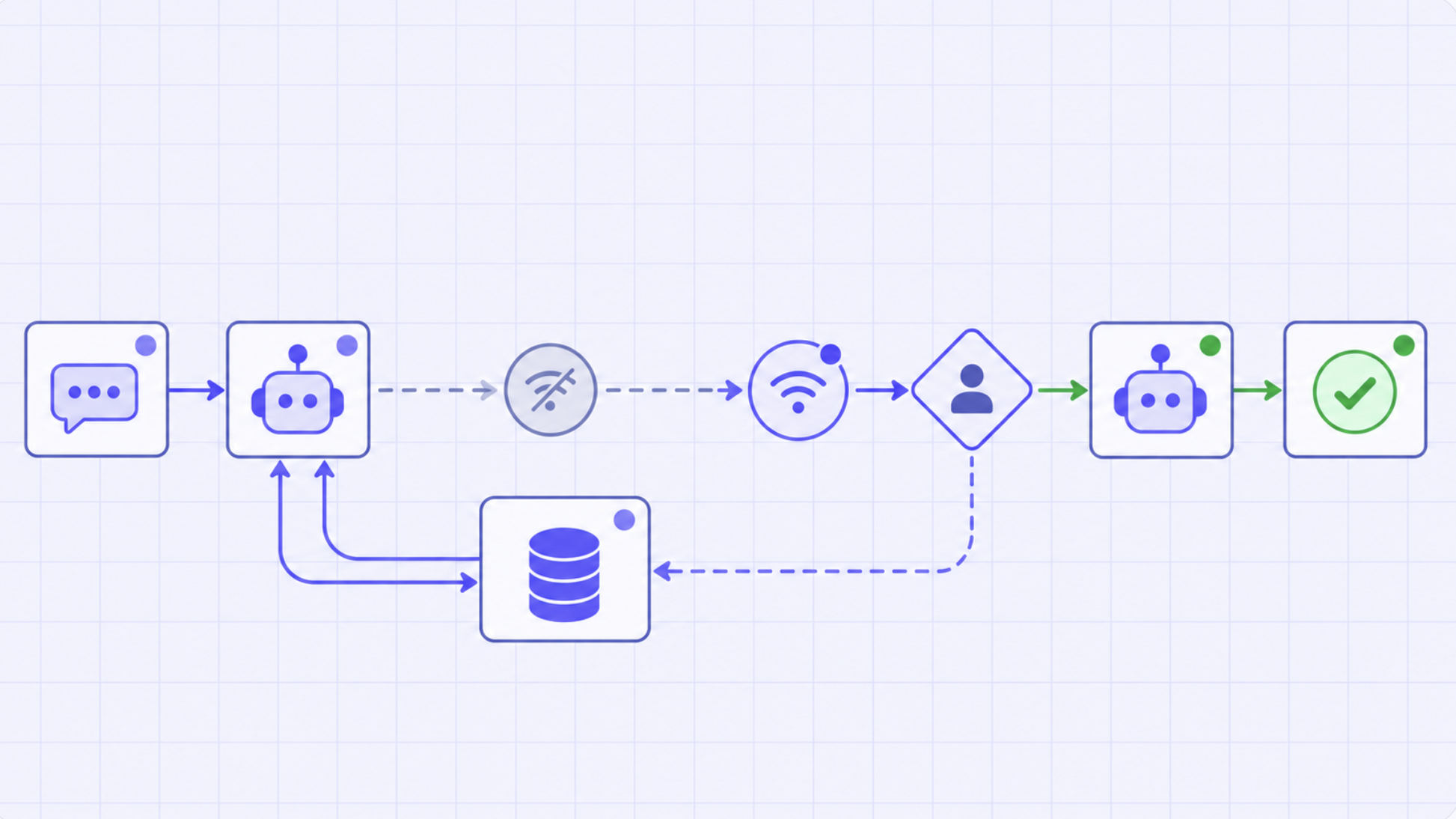
Model Routing & Fallback: Automatically select the best model for each request or failover to a backup during provider outages.
Prompt Caching: Cache common queries to reduce cost and latency. Semantic caching goes further by matching similar — not just identical — prompts.
Cost Tracking: Measure token usage and cost per project, model, or endpoint.
Rate Limiting: Enforce per-user or per-service rate limits to prevent abuse.
Role-Based Access Control (RBAC): Assign permissions and isolate projects.
Observability: Monitor latency, request success rates, and throughput.
Audit Logging: Maintain records for compliance and debugging.
Fine-Grained Policy Enforcement: Sanitize or block disallowed prompts.
In many setups, a proxy acts as the core layer of the gateway architecture. For a deeper comparison, read What is an LLM Gateway? and see how AI gateway architecture fits in the generative AI stack. If you've outgrown the proxy pattern, TrueFoundry's AI Gateway combines both layers — proxy-speed routing with enterprise governance.
Vendor Independence: Avoid getting locked into a single provider. Easily switch models without rewriting code.
Unified API Interface: Developers use one endpoint and request format. The proxy handles translation to provider-specific APIs.
Simplified Integration: Integrate once, route anywhere. It accelerates experimentation with new models.
Enhanced Observability: Get analytics on performance, cost, and latency across all LLMs.
Security & Compliance: Enforce policies, sanitize prompts, and monitor data flow.
Performance Optimization: Use caching, routing logic, and fallback models to ensure reliability.
Team Collaboration: Centralize LLM usage across multiple applications, services, and teams.
Deployment depends on your scale and compliance requirements.
Choose Hosting Model
Configure Providers: Add API keys and credentials for each provider (for example, OpenAI, Anthropic, Gemini). Store them securely in environment variables or secret managers.
Define Routing Rules: Use YAML or JSON configs to define routing logic.
Connect Applications: Point all app requests to the proxy endpoint instead of provider APIs.
Monitor and Optimize: Set up dashboards to view token usage, latency, and model performance.
Centralize Key Management: Use vaults or secret stores instead of hardcoding keys.
Implement Prompt Caching: Cache frequent prompts to save costs.
Track Costs Continuously: Create dashboards and alerts for usage thresholds.
Enforce Policies: Filter disallowed inputs or data.
Use Fallback Models: Avoid downtime during provider outages.
Set Rate Limits: Prevent overuse and maintain SLAs.
Monitor Latency: Regularly benchmark model response times.
Despite its benefits, implementing an LLM Proxy isn't without hurdles:
Latency Overhead: Each proxy hop introduces some delay. Optimize with local caching and async routing.
Complex Routing Logic: Poorly designed rules can cause cost inefficiency or degraded results.
Security Risks: Misconfigured proxies could leak sensitive data.
Cost Tracking Complexity: Accurate cost attribution across teams requires robust analytics.
Maintenance: Self-hosted proxies require ongoing updates, scaling, and observability setup.
An LLM Proxy is far more than a network router. It is a strategic control layer that empowers teams to manage multiple language models with efficiency, security, and insight. By abstracting provider differences, enforcing policies, and centralizing observability, it transforms LLM integration from a chaotic, multi-API struggle into a seamless, governed workflow.
Whether you're a startup experimenting with AI features or an enterprise deploying AI at scale, an LLM Proxy is your foundation for scalable, compliant, and cost-efficient LLM infrastructure.
As the ecosystem evolves, expect LLM Proxies to merge into intelligent gateways that orchestrate requests across models, agents, and entire AI ecosystems — exactly the architecture behind TrueFoundry's AI Gateway, which adds ~3–4ms overhead while handling 350+ RPS on a single vCPU. If you're building the next generation of AI products, start with a proxy-first architecture. Your future self and your DevOps team will thank you.
An LLM Proxy acts as a central hub that manages communication between your applications and various AI model providers. It simplifies your infrastructure by providing a single endpoint for multiple APIs. This setup allows you to enforce security rules, monitor token usage, and manage costs without changing any of your core application code.
An LLM Proxy provides application-level control that a standard VPN cannot offer for AI development workflows. While a VPN secures your network connection, the proxy layer understands your specific AI traffic, allowing for semantic caching and prompt guardrails. It offers the visibility and security required for managing sensitive generative AI data.
An LLM Proxy shields your internal infrastructure and private API credentials from direct exposure to third-party model providers. It acts as a secure intermediary, masking your source while centralizing authentication. This architecture prevents key leakage and ensures that only authorized traffic reaches your foundation models, keeping your entire AI stack secure.
An LLM Proxy helps enterprises track and log every model interaction for better governance and detailed cost management. Instead of fragmented data, this system provides transparent visibility into which teams use which models and how much they spend. It ensures your organization meets compliance standards while monitoring the performance of integrations.
An LLM proxy optimizes AI workflows by providing a unified API gateway for multiple models. Organizations use this central layer to enforce security policies and implement semantic caching to reduce latency. Once you understand LLM proxy integration, you can easily monitor token usage and switch providers without changing code.
TrueFoundry AI Gateway delivers ~3–4 ms latency, handles 350+ RPS on 1 vCPU, scales horizontally with ease, and is production-ready, while LiteLLM suffers from high latency, struggles beyond moderate RPS, lacks built-in scaling, and is best for light or prototype workloads.






The latest news, articles, and resources sent to your inbox
.png)
.png)
.png)
.png)
.png)
.png)
.png)
.png)
.png)
.png)
.png)


