


September 19, 2026
|
5 min read


Published: June 23, 2026
.webp)
Blazingly fast way to build, track and deploy your models!
The use of artificial intelligence becomes increasingly mainstream, with engineering teams embedding large language models into internal solutions, product teams developing AI functionalities, and data teams deploying AI models that facilitate decision-making processes within the company. However, as much as AI is widely adopted by many companies today, it remains true that governance usually lags behind.
Many businesses unintentionally create conditions where the use of AI systems is uncontrolled and undetected. Developers try various public LLM APIs with sensitive data, models are deployed without clear evaluation criteria, and infrastructure costs become unpredictable due to AI-related compute requirements. This type of use of AI technology is commonly called Shadow AI.
This practice leads to security risks that senior executives usually realize too late when their companies face a breach in compliance or an unexpected expense increase. As more and more organizations transition from experimental to production use of AI, the importance of AI governance goes beyond being an afterthought or a necessary compliance step. Governance of the use of AI technologies becomes critical for security, reliability, compliance, and cost savings. Companies that are successful at scaling the use of AI view governance as one of their infrastructure layers, rather than an additional process or a set of guidelines.
This guide is dedicated to the key AI governance practices, four fundamental principles of AI governance, and ways modern platforms make it possible to govern AI in a simple and cost-effective manner.
.webp)
AI governance is the operational framework that ensures AI systems are built, deployed, and used responsibly across an organization.
Unlike traditional governance models that focus on static policies or documentation, AI governance must be continuous and operational. AI systems evolve quickly, models get updated, prompts change, new datasets are introduced, and infrastructure usage grows.
Because of this dynamic nature, governance must operate as an ongoing system of controls, visibility, and automation.
At its core, AI governance ensures that AI systems remain:
Traditionally, the process of governance was centered around manual auditing procedures. Policies were recorded for AI, regular audits of implementation were carried out, and governance was implemented via internal approval processes. But this process cannot scale anymore. With the current landscape of artificial intelligence, there could be hundreds or thousands of transactions between AI models within minutes. Thus, the process of governance should be brought down to the level of AI runtime execution, where policies can be enforced automatically. This is the difference between good and bad AI governance processes.
For example, instead of relying on developers to avoid sending sensitive data to external models, governance systems can automatically:
These automated guardrails allow organizations to enable AI experimentation while maintaining operational safety. In practice, effective AI governance does not slow innovation. Instead, it provides the infrastructure that allows teams to scale AI safely.
In the early stages of AI experimentation, governance often feels unnecessary. A few engineers testing prompts or building prototypes with public APIs usually does not raise immediate concerns. However, once AI systems start supporting real workflows or customer-facing applications, the risks become significantly more serious.
Production AI systems interact with real data, real users, and real infrastructure costs. Without governance, organizations quickly lose visibility into how AI is being used, what data is flowing through models, and how much these systems are costing to operate.
One of the most immediate risks is data leakage through prompts and responses. Big language models typically depend on third-party APIs or inference services provided by hosting providers. Developers may accidentally incorporate sensitive information into prompt messages, which might be data related to their customers or any other confidential information like internal documents or proprietary source code.
Another challenge organizations face is tracking AI-related costs across teams and applications. AI compute loads may depend on costly resources like GPUs or high-performance inference nodes. On the other hand, using API-driven LLMs can incur high token usage charges that cannot be easily allocated to a specific team or service. In the absence of governance controls such as resource tracking and budget caps, AI expenditures can become unmanageable.
Regulatory exposure is also increasing as AI systems begin handling sensitive data. Governments and regulatory authorities are implementing new regulations regarding transparency, fairness, and privacy of data related to AI technologies. The EU AI Act can be seen as a perfect example in this context. Companies unable to prove the monitoring, control, and auditing of AI will most likely be exposed to a risk of damaging their reputation and will be facing possible lawsuits in the future.
Operational reliability is another critical factor. AI models can fail in ways traditional software systems do not. They may produce hallucinated outputs, degrade in performance after updates, or behave inconsistently depending on inputs. Without observability and evaluation frameworks, teams may struggle to detect when AI systems start producing incorrect or harmful outputs in production.
These issues collectively highlight why governance must be embedded directly into the AI infrastructure layer. Organizations need systems that provide visibility, control, and accountability across AI workloads, ensuring that experimentation can continue while production systems remain safe, predictable, and cost-effective.
Effective AI governance allows teams to innovate confidently while ensuring that AI systems remain aligned with ethical principles, ethical guidelines, and operational standards. Without it, organizations expose themselves to potential risks that span data security, compliance, and stakeholder trust.
.webp)
Good AI governance enables innovation while ensuring that any AI solutions remain in line with ethical standards. In its absence, companies put themselves at risk for various threats.
One possible solution to AI governance is based on four pillars of AI governance – data governance, model governance, governance of processes and policies, and infrastructure and cost governance.In their unity, these pillars help companies maintain control over AI systems and make sure that they stay safe, secure, and controllable.
.webp)
Data governance underpins AI governance since AI algorithms cannot perform beyond the quality of the data they process. The absence of sufficient data governance processes is one of the leading factors in AI malfunction. AI algorithms depend on more than one source of data to function effectively. Examples of data sources include training data, retrieval-augmented generation (RAG) pipelines, internal documentation, customer data, and real-time user input.
Data governance processes help in ensuring that the data fed to an AI algorithm is authorized and protected.Data governance involves authorizing data utilized during training, fine-tuning, and inference.
Organizations must implement mechanisms that allow them to:
For instance, there is growing use of prompt filtering or data masking techniques that automatically identify any sensitive information within the data stream prior to sending the prompts to outside models. By controlling the flow of data through the AI system, an organization can minimize risks related to data leakage, breaches of regulations, and IP disclosure.
Models themselves need governance through their entire life cycle.
In many cases, models tend to be upgraded quickly within an organization. For instance, various providers might be tested out; alternatively, models might change from being open source to being managed by another party, or models might undergo frequent changes because they are updated to enhance their performance.
The lack of governance means that it will be hard to monitor models, determine how they work, and check whether they meet standards. Model governance involves:
For example, organizations may require that new models pass automated evaluation tests for accuracy, hallucination rates, or bias detection before being allowed into production environments. Without these controls, teams may unintentionally deploy models that introduce reliability issues or violate licensing constraints. Model governance ensures that AI systems remain consistent, trustworthy, and aligned with organizational standards even as models evolve.
While data and models are technical components, governance also requires clear processes and organizational policies. Business leaders and data science teams must collaborate to define how AI resources are accessed and who bears accountability for model behavior.
Some organizations establish a dedicated ethics board to oversee ethical AI deployment and ensure that ethical considerations are embedded into AI decision-making from the start. Process and policy governance defines who is allowed to access AI resources, who can deploy models, and how different teams interact with AI systems.
As AI adoption grows, multiple teams may use the same models or infrastructure. Without structured access controls, this can create operational risks. For example, a development team experimenting with a new model could accidentally deploy it into a production environment.
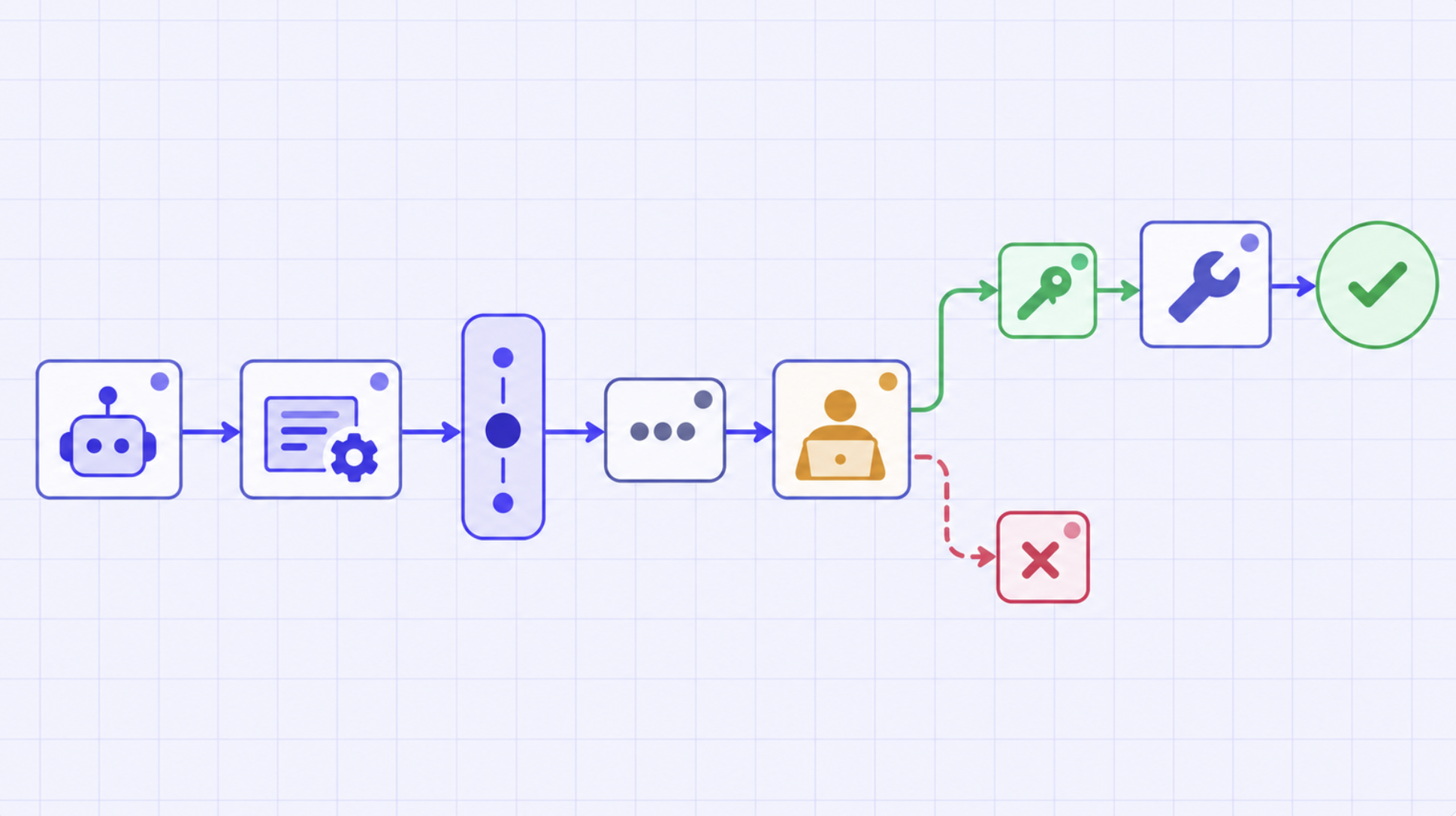
To avoid these situations, organizations implement role-based access control (RBAC) and structured approval workflows. Common process governance measures include:
AI systems introduce new infrastructure challenges that traditional software systems rarely encounter.
Running AI workloads often requires specialized infrastructure, including GPUs, large memory environments, and high-throughput inference endpoints. Additionally, many AI systems rely on token-based billing models when interacting with hosted APIs. Without governance, these costs can escalate rapidly.
Infrastructure and cost governance focuses on monitoring and controlling the resources consumed by AI systems. This includes:
For example, organizations may set automated policies that pause or reroute AI workloads when a project exceeds its allocated budget. This approach aligns with the growing practice of AI FinOps, where infrastructure spending is continuously monitored and optimized to prevent unexpected cost spikes.
Together, these four pillars provide a comprehensive framework for implementing AI governance best practices. Organizations that build governance across all four areas are far better positioned to scale AI safely while maintaining security, compliance, and cost control.
While the four governance pillars provide a strategic framework, organizations still need practical steps to implement governance in real-world AI environments.
Organizations that treat AI governance as a competitive advantage rather than a compliance burden tend to scale their AI projects more sustainably.
The most effective approach is to implement governance as part of the AI platform itself, rather than as a separate oversight layer. This allows organizations to enforce policies automatically while still enabling developers and data scientists to move quickly.
The following AI governance best practices can help enterprises build safer, more controlled AI environments without slowing down innovation.
One of the most common governance challenges is fragmented AI access.
In many organizations, developers directly integrate multiple AI APIs into their applications. Each service may use different API keys, endpoints, and logging systems. Over time, this creates a fragmented environment where organizations lose visibility into how AI is being used.
Centralizing AI traffic through an AI gateway solves this problem. A trusted AI gateway acts as a unified entry point through which all AI requests pass before reaching external models or internal inference services. Instead of each application communicating directly with AI providers, requests are routed through the gateway where governance policies can be enforced.
This approach provides several benefits:
For example, if a developer accidentally includes confidential data in a prompt, the gateway can detect and mask that information before it leaves the organization's environment. By routing all AI interactions through a centralized control layer, organizations gain the visibility required to manage AI usage safely.
The cost of AI computing jobs increases quite rapidly.
The large-scale inference systems will require GPU support, which is much more expensive compared to conventional computing. Also, the tokenization approach adopted by most hosted LLMs may result in high costs in the scaling phase of the application. It is possible for the organization to notice its true cost of implementing AI technology only after the infrastructure bill comes up each month. To prevent such an outcome, companies have started using the AI FinOps approach.
The AI FinOps approach refers to bringing financial discipline to AI infrastructure operations.
Examples include:
Not every team member should have unrestricted access to all AI resources.
In many organizations, the same models, datasets, and infrastructure are shared across multiple teams. Without access controls, this can create significant risks. A developer testing experimental prompts could accidentally interact with sensitive datasets or production models.
Role-Based Access Control (RBAC) helps organizations enforce clear boundaries. RBAC allows administrators to define who can access specific AI resources and what actions they are allowed to perform.
For example:
RBAC can also be used to separate experimentation environments from production environments, ensuring that teams can safely test new models or prompts without affecting systems that serve real users.
AI systems introduce a new challenge compared to traditional software: outputs are probabilistic rather than deterministic.
Two responses generated by the same model may differ slightly depending on prompts, context, or system configuration. This makes traditional software testing methods insufficient for evaluating AI systems. As a result, organizations must adopt standardized model evaluation frameworks.
Instead of relying on subjective manual testing, teams can implement automated evaluation pipelines that measure model performance across predefined benchmarks. Common evaluation metrics include:
Automated evaluation helps organizations detect performance regressions when models are updated or replaced. For example, if a new model version produces more hallucinations than the previous one, the evaluation system can flag the issue before deployment. Standardized evaluation ensures that AI systems maintain consistent performance and reliability in production environments.
Some of the AI governance problems result from the way AI infrastructure has been implemented.
AI applications that have been developed using a lot of third-party SaaS products lead to loss of control on the data, logging, and monitoring process.A privately designed implementation strategy can help overcome these problems.This entails deploying the AI infrastructure within the organization’s cloud or within the VPC of the organization.
Some benefits of this approach include:
This architecture allows organizations to integrate governance directly into their infrastructure stack while maintaining flexibility to use external models when necessary. Private-by-design deployments are increasingly becoming the preferred architecture for enterprises that want to scale AI while maintaining security and operational control.
These best practices provide a practical roadmap for implementing AI governance best practices in real-world environments. When combined with the four governance pillars discussed earlier, they help organizations build AI systems that are not only powerful but also secure, observable, and cost-efficient.
As organizations begin implementing AI governance, many discover an unexpected challenge: governance itself can become expensive and complex when implemented through traditional enterprise tooling.
In many AI platforms, governance capabilities are not part of the core system. Instead, they are introduced as additional features, external integrations, or enterprise-tier upgrades. While these solutions promise control and visibility, they often create a fragmented architecture that increases operational overhead.
One of the biggest concerns is that the governance capabilities are only unlocked via expensive enterprise plans. While it might be possible to use basic AI tools for model training or API invocation, more advanced functions like request logging, chargeback, policy enforcement, or even RBAC can only be done through an expensive plan.
Therefore, the problem arises because businesses have no other option but to spend more on platforms just to unlock the capabilities necessary for production-level AI operations.Another expense comes with having to employ more tools due to fragmented capabilities. This is an especially big issue when you consider that, without integrated governance capabilities, organizations will have to use different tools to:
Managing these tools introduces additional operational complexity. Engineering teams must maintain integrations between systems, ensure compatibility across updates, and troubleshoot issues when data or logs fail to synchronize properly. Over time, this fragmented setup can slow down AI development rather than supporting it.
There is also a less obvious financial impact related to cloud data movement. Many governance tools rely on collecting logs, telemetry, and monitoring data outside the organization's cloud environment. When logs are exported to third-party SaaS platforms for analysis, organizations may incur cloud egress fees as data leaves their virtual private cloud (VPC). For AI systems that process large volumes of prompts and responses, these costs can accumulate quickly.
In addition to the direct expenses, organizations may also lose data ownership and operational visibility when observability data is stored outside their infrastructure.
These challenges highlight why modern AI governance strategies are increasingly shifting toward infrastructure-aligned platforms, systems where governance capabilities are embedded directly into the AI infrastructure layer rather than added as external services.
When governance is integrated into the platform itself, organizations can maintain visibility, enforce policies, and control costs without introducing additional tooling complexity or enterprise pricing barriers. This approach not only reduces operational overhead but also ensures that governance evolves naturally alongside the AI systems it is designed to protect.
Implementing AI governance often requires organizations to rethink how their AI infrastructure is designed. Rather than layering governance tools on top of existing systems, modern platforms embed governance directly into the infrastructure that runs AI workloads.
TrueFoundry takes this infrastructure-first approach to AI governance.
TrueFoundry is a Kubernetes-native AI platform designed to deploy, manage, and govern large-scale AI workloads, including LLM inference, fine-tuning, and agentic AI applications. The platform integrates deployment infrastructure, model orchestration, and governance controls into a unified environment, enabling engineering teams to scale AI safely across organizations.
Instead of relying on fragmented governance tools, TrueFoundry provides built-in capabilities that align closely with the four pillars of AI governance discussed earlier.
A key aspect of TrueFoundry's approach is its split-plane architecture, which separates platform management from workload execution.
The control plane is used for orchestrating deployment, configuration, policies, and monitoring. On the other hand, the compute and gateway planes operate from within the enterprise’s infrastructure, like the Kubernetes cluster.
With this setup, the platform manages everything from the outside while all sensitive data and models reside safely within the enterprise’s own environment. The importance of this type of system in terms of data governance and AI compliance stems from the fact that all AI workloads may operate entirely within a virtual private cloud (VPC) or on-premises infrastructure.
TrueFoundry includes an AI Gateway that acts as a centralized control layer for AI interactions.
Instead of allowing applications to connect directly to multiple model providers, the gateway provides a single entry point for routing AI requests. This allows organizations to enforce governance policies consistently across all AI workloads.
The gateway enables capabilities such as:
By centralizing AI traffic, organizations gain full visibility into how models are used across teams while maintaining control over data and costs.
Infrastructure expenses associated with AI is one of the main problems organizations experience as more businesses adopt it. With this issue, TrueFoundry provides integrated observability along with the cost management features of the platform.
It enables the monitoring of AI request processing, token usage, and overall performance of the system. In turn, the ability to attribute costs associated with the system to certain business units or workloads will become apparent. Moreover, the system offers governance through rate limiting and budget control among others.
Many traditional AI platforms treat governance as a separate compliance layer or an optional add-on. TrueFoundry takes a different approach by embedding governance directly into the platform.
The system includes built-in capabilities such as:
Because these governance capabilities are integrated into the platform architecture, engineering teams can focus on building AI applications without having to assemble multiple external tools for security, monitoring, and cost control.
Also Read: TrueFoundry Platform Overview
Another important advantage of TrueFoundry's architecture is that it allows organizations to maintain control over their infrastructure.
The TrueFoundry acts as the orchestration layer which will work seamlessly with your cloud and Kubernetes setup. In other words, you will be able to deploy your models and perform AI workloads without losing control over your infrastructure and data environment.
This approach of integrating with your existing infrastructure will allow you to scale your AI efforts safely and flexibly regardless of whether you have a cloud, on-prem or hybrid infrastructure. Here, we are seeing how governance can be built into the AI platforms themselves rather than added on top as a compliance layer.
(Also Read: How TrueFoundry Integrates with AWS)
.webp)
As AI adoption grows across teams, it becomes increasingly important to evaluate whether your platform is capable of supporting governance at scale. Many organizations only realize governance gaps after AI systems are already running in production, which can make it harder to introduce controls without disrupting workflows.
A useful way to assess readiness is to ask a few practical questions about how your platform handles security, access control, cost monitoring, and infrastructure ownership. If your AI platform cannot answer these questions clearly, it may be a sign that governance capabilities are missing or implemented through external tools.
Below is a quick checklist that organizations can use to evaluate whether their AI infrastructure supports strong governance practices.
1. Does the platform automatically mask sensitive data?
AI systems frequently process user inputs, internal documentation, or customer information. A governance-ready platform should be able to detect and mask sensitive information, such as API keys, personally identifiable information (PII), or confidential documents, before prompts are sent to external models.
2. Can you enforce budget limits per team or application?
AI workloads can quickly generate significant infrastructure costs. A governance-ready platform should allow administrators to define spending limits for specific teams, projects, or environments and enforce those limits automatically.
3. Do you retain ownership of logs and telemetry?
AI observability data, such as prompts, responses, usage metrics, and performance logs, is critical for auditing and troubleshooting. Ideally, these logs should remain within your organization's infrastructure so that you maintain full control over sensitive operational data.
4. Is the platform deployed inside your VPC or controlled cloud environment?
Running AI infrastructure inside your own virtual private cloud (VPC) allows you to enforce network-level security controls, protect internal data sources, and maintain compliance with data residency requirements.
5. Are SSO and RBAC available by default?
Enterprise-ready AI platforms should support Single Sign-On (SSO) and Role-Based Access Control (RBAC) to ensure that only authorized users can access models, datasets, and infrastructure resources.
When these capabilities are built into the platform itself, governance becomes a natural part of the AI development process rather than an external compliance burden. Organizations that prioritize governance early in their AI journey are far better positioned to scale AI safely while maintaining operational control.
.webp)
As companies increasingly embed AI in their products, processes, and operations, governance cannot be left for the end anymore. What initially may have looked like simply trying out a couple of APIs grows into a fully-fledged ecosystem of models, data sets, prompts, and infrastructure without appropriate governance becoming hard to manage. Teams lose visibility into how AI is being used, costs become unpredictable, and the risk of data exposure or unreliable outputs increases.
However, governance should not be seen as something that slows innovation.
In practice, a well-designed AI governance framework enables organizations to scale AI with confidence. By establishing clear controls around data, models, infrastructure, and access, teams gain the freedom to experiment and deploy AI systems without introducing unnecessary risk.
This is why many organizations are moving away from fragmented governance tools toward unified AI platforms. When governance is embedded directly into the infrastructure layer, policies can be enforced automatically, observability becomes easier, and teams spend less time managing integrations between separate systems.
AI infrastructure-aware governance is also critical in enabling firms to continue controlling their data, workload, and cost even as they increase their adoption of AI. Rather than leveraging the traditional approach that uses third-party SaaS systems and thus shifting their logs and telemetry out of their environment, enterprises are now able to use their own cloud to manage AI systems in a way that is centralised and enables them to exercise control over costs, governance, and infrastructure.
Platforms such as TrueFoundry have been created using this concept, whereby they focus on making governance an intrinsic part of the AI platform itself.
As AI continues to become a foundational technology across industries, organizations that invest early in strong governance frameworks will be far better prepared to scale AI responsibly and sustainably.
If you are exploring ways to implement AI governance best practices while maintaining full control over your infrastructure, consider exploring what TrueFoundry offers as an infrastructure-aligned AI platform. Book a demo now.
TrueFoundry AI Gateway delivers ~3–4 ms latency, handles 350+ RPS on 1 vCPU, scales horizontally with ease, and is production-ready, while LiteLLM suffers from high latency, struggles beyond moderate RPS, lacks built-in scaling, and is best for light or prototype workloads.




AI governance best practices refer to the policies, controls, and operational frameworks that ensure AI systems are secure, reliable, compliant, and cost-efficient. These practices include managing data access, monitoring model performance, enforcing role-based access control, tracking infrastructure usage, and implementing automated guardrails. Organizations with strong AI governance can scale AI safely while maintaining visibility and control across teams and applications.
The four pillars of AI governance provide a structured framework for managing AI systems: data governance ensures training data is secure and protected from leakage; model governance manages the AI lifecycle from versioning to monitoring; process and policy governance defines roles and access controls; and infrastructure and cost governance monitors compute and token consumption for responsible AI use.
Three primary focus areas guide AI governance best practices: data security and data protection prevent sensitive information from being exposed through prompts or datasets; operational reliability ensures AI models perform consistently and are monitored for failures; and cost and infrastructure control tracks resource usage and prevents runaway spending from GPU workloads or API-based model usage.
Not necessarily. Many organizations initially combine multiple compliance and monitoring tools for AI governance, which often leads to fragmented visibility and operational complexity. Modern AI platforms increasingly integrate governance features directly into the infrastructure layer, providing built-in logging, access control, policy enforcement, and cost monitoring, reducing the need for multiple external tools and supporting responsible AI use.
Shadow AI occurs when employees use AI tools without oversight from the organization's official governance framework, often by connecting directly to public APIs outside approved workflows. This creates risks including exposure of confidential data through prompts, lack of visibility into AI usage across teams, increased regulatory and compliance risks, and uncontrolled infrastructure costs. Strong AI governance best practices help detect and prevent Shadow AI.



The latest news, articles, and resources sent to your inbox
.png)
.png)
.png)
.png)
.png)
.png)
.png)
.png)
.png)
.png)
.png)


